15 International Moving Tips from 25 Years of Helping People Relocate
Practical international moving tips from City Post Express — 25 years of shipping household goods overseas. Specific advice on ocean freight timing, customs paperwork, packing by volume, and settling into your new country.
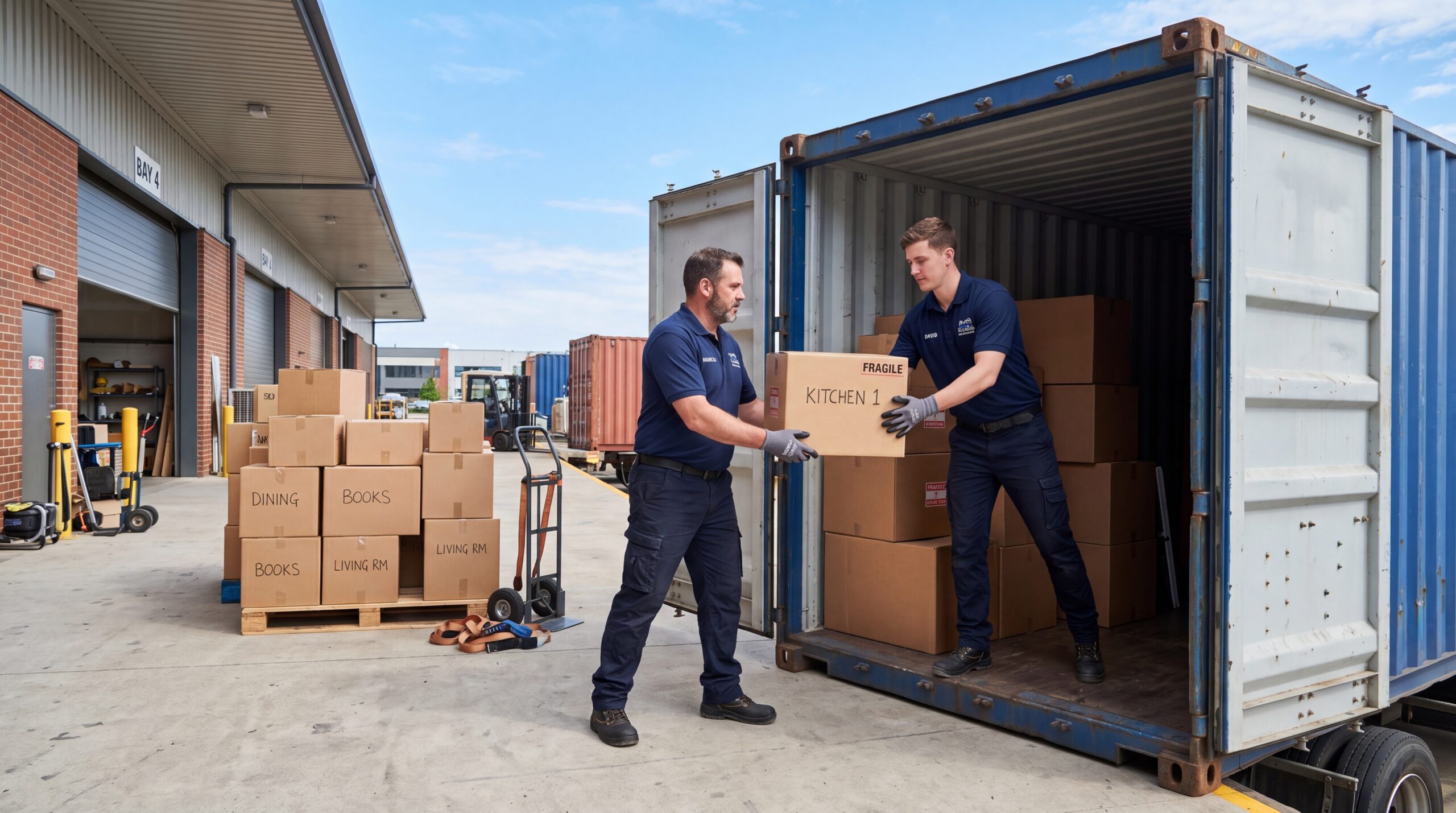
Most “international moving tips” articles tell you to start planning early and declutter your closet. That is fine as far as it goes, but it does not help much when you are staring at a 20-foot shipping container wondering how to fill it efficiently, or when a customs officer in Dublin is asking for the original purchase receipt for your grandmother’s dining table.
We have been shipping household goods overseas for 25 years at City Post Express. In that time we have moved families to Ireland, the UK, Australia, mainland Europe, and beyond. These are the tips we actually give our customers — the specific, sometimes surprising lessons we have learned from tens of thousands of international shipments.
Shipping and Freight Tips
1. Book ocean freight 4–6 weeks before your move date
Ocean freight is not like booking a flight. Vessel space fills up, especially on popular transatlantic routes during peak season (May through September). If you wait until two weeks out, you may lose an entire sailing cycle — which adds 2–3 weeks to your delivery window. We tell every customer: once your move date is confirmed, lock in your ocean freight booking immediately. Four to six weeks of lead time gives you a comfortable buffer for packing, pickup, and port processing.
2. Understand that ocean freight charges by volume, not weight
This is the single most misunderstood part of international shipping. Your price is based on cubic feet (or cubic meters), not kilograms. A half-empty box of books costs exactly the same to ship as a full one. The practical takeaway: fill every box completely. Use towels, linens, and soft clothing to pack around heavier items. You are paying for the space either way — make sure you use it.
3. Consider a mini move if you are not shipping a full household
Most international movers quote for full container loads (FCL) — either a 20-foot or 40-foot container. But if you are moving to a furnished apartment or only shipping personal belongings and a few pieces of furniture, you do not need a full container. Our international mini moves service lets you ship smaller volumes using shared container space (LCL — less than container load). It is significantly cheaper and often faster than waiting to fill an entire container.
4. Ship non-essential items separately by sea and keep essentials with you
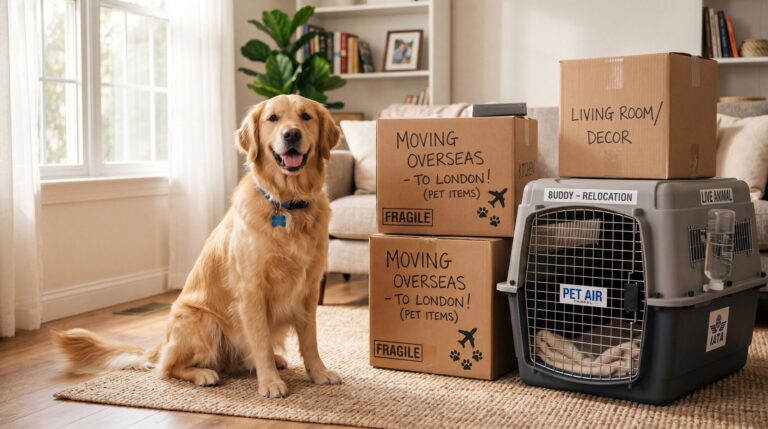
Ocean freight typically takes 4–8 weeks for transatlantic routes and 8–12 weeks to Australia or New Zealand. You will not have your household goods for a while. Pack two or three suitcases with everything you need for the first two months: medications, important documents, a few sets of clothes for each season, children’s comfort items, laptop and chargers, and basic kitchen supplies like a good knife and a coffee maker. Everything else goes in the container.
5. Get transit insurance — do not rely on carrier liability
Standard carrier liability for ocean freight is notoriously low, typically around $0.60 per pound. That means your $2,000 flat-screen TV that weighs 30 pounds is covered for about $18. Proper marine transit insurance covers replacement value and costs far less than you would expect — usually 2–3% of the declared value of your goods. We arrange this for every shipment and consider it non-negotiable.
Customs and Documentation Tips
6. Keep purchase receipts for everything you are shipping
Customs authorities in most countries require a detailed inventory of your shipment, and they can ask for proof of ownership or value for any item. This is especially true for electronics, artwork, antiques, and musical instruments. We have seen shipments delayed for weeks because a customer could not produce a receipt for a high-value item. Before you start packing, photograph receipts, save digital copies, and create a simple spreadsheet listing each item and its approximate value.
7. Know the difference between “used household goods” and “new goods”
Most countries allow you to import used personal and household goods duty-free when you are relocating — but only if they are genuinely used. If customs inspectors find items still in original retail packaging with tags attached, those items may be classified as new goods and attract import duty and taxes. Unbox new purchases before you pack them. Use that new set of dishes a few times. Break in those shoes. It sounds strange, but it can save you hundreds in unexpected duties.
8. Research prohibited and restricted items for your destination country
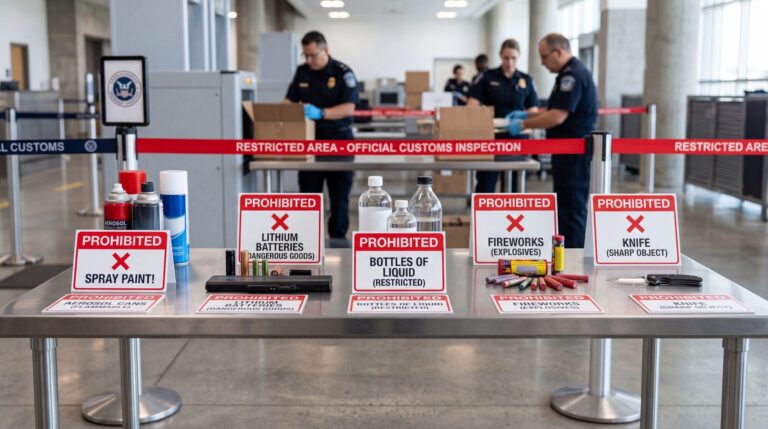
Every country has a different list of restricted imports, and they are not always obvious. Ireland restricts certain plants and soil. Australia is extremely strict about anything organic — including wooden furniture that has not been treated. The UK has rules about certain electronics and voltage standards. Before you pack a single box, get the specific restricted items list for your destination. If you are moving to Ireland from the US, we can walk you through every requirement.
9. File your customs paperwork before your shipment arrives at port
One of the most common causes of shipment delays is paperwork that arrives after the container does. Your customs broker needs your signed inventory, packing list, passport copies, visa or residency documentation, and any required permits before the ship docks. At City Post Express, we start the customs documentation process the day your shipment leaves the origin warehouse — not when it is on the water. Ask your moving company when they plan to file, and push for early submission.
Packing Tips for International Moves
10. Use uniform box sizes wherever possible
Mixed box sizes create air gaps in a shipping container. Air gaps mean your boxes shift during the 10–14 day ocean crossing. Shifting means damage. Professional international movers use a limited range of standardized carton sizes specifically because they stack and interlock efficiently. If you are packing yourself, stick to standard “book boxes” (roughly 1.5 cubic feet) for heavy items and “medium boxes” (roughly 3 cubic feet) for lighter belongings. Avoid oversized or irregular boxes.
11. Wrap furniture for humidity, not just impact
Ocean containers experience significant temperature and humidity fluctuations during transit. We have seen condensation damage wooden furniture, cause mold on upholstered items, and warp musical instruments. The fix is straightforward: wrap wooden furniture in moving blankets and then in stretch wrap to create a vapor barrier. For high-value wood pieces, use silica gel packets inside the wrapping. Leather and upholstered items should be wrapped in breathable material — never directly in plastic, which traps moisture.
12. Disassemble everything that comes apart
Bed frames, dining tables, shelving units, desk legs — if it has bolts, take it apart. Disassembled furniture ships flatter, wastes less cubic space (remember, you are paying by volume), and is far less likely to be damaged. Put all hardware in labeled zip-lock bags and tape them to the corresponding furniture piece. Take a photo of each item before disassembly so you know exactly how it goes back together.
Settling In: Tips for After You Arrive
13. Open a local bank account before your shipment arrives
You will likely need a local bank account to pay for delivery fees, utilities setup, and immediate living expenses. Many countries require proof of address to open an account, which creates a catch-22 when you have just arrived. Research banks that offer accounts to new residents before you arrive. In Ireland, for example, some banks allow you to start the application process online from abroad. Having a funded local account ready means you are not scrambling when your container clears customs and the delivery crew is ready to unload.
14. Do not buy furniture until your shipment arrives
We see this mistake regularly. Customers arrive, their container is still on the water, and they buy temporary furniture to fill an empty apartment. Then the shipment arrives, and they have duplicate sofas and dining sets. If you planned your suitcase packing well (see tip 4), you can manage for several weeks with minimal furnishings. An air mattress and a folding table are far cheaper than buying — and then disposing of — furniture you do not need.
15. Build your expat network early, but do not live inside the expat bubble
Connecting with fellow expats is invaluable during the first few months. They know which neighborhoods to live in, which phone carriers have the best coverage, and which bureaucratic offices require an appointment versus walk-ins. But do not make the mistake of only socializing within the expat community. Join a local sports club, shop at neighborhood markets, attend community events. The people who settle in most successfully are the ones who build a life that includes both expat support and genuine local connections.
The Bottom Line
International moving is a logistics challenge, but it does not have to be an overwhelming one. The difference between a stressful move and a smooth one almost always comes down to preparation — specifically, understanding how international shipping actually works and planning around its realities rather than treating it like a longer version of a domestic move.
At City Post Express, we have spent 25 years refining the process of getting people’s belongings safely across oceans. Whether you need a full container, a mini move, or just advice on the cheapest way to ship overseas, we are here to help.
View our shipping packages or get in touch for a free quote.
Related Reading
Ready to Ship?
Get a free, no-obligation quote for your move. Door-to-door service with customs clearance included.
Get a Free Quote