Downsizing Before an International Move: What to Keep, Ship, and Leave Behind
After 25+ years helping people ship their belongings overseas, we have a simple framework for deciding what to keep, ship, and leave behind when downsizing for an international move.

Every week, someone calls us with the same question: “I’m moving overseas — should I ship everything or start over?” After 25 years of helping people send their belongings from the US to Ireland, the UK, and across Europe, we have heard this question thousands of times. And our answer is always the same: neither. The sweet spot is somewhere in the middle, and finding it can save you thousands of dollars.
Downsizing for an international move is not the same as decluttering your closet. The stakes are higher, the logistics are more complex, and the cost of getting it wrong — shipping things you do not need or leaving behind things you cannot replace — is very real. This guide is the framework we share with every customer at City Post Express, drawn from real experience helping real people navigate this decision.
Why Downsizing for a Move Overseas Is Different
When you move across town, you throw everything in a truck and sort it out later. When you move overseas, every item has a cost attached to it. International shipping costs roughly $65 per box by ocean freight. That means shipping a box of $30 kitchen gadgets actually costs you $95 — and you could buy replacements at your destination for less.
This cost-per-box math is the single most important concept in downsizing for an overseas move. Once you understand it, every decision becomes clearer. We walk our customers through this calculation before they pack a single box, and it transforms how they think about their belongings.
Beyond cost, there are practical realities. Ocean freight shipments take 4–8 weeks to arrive. That means anything you ship, you will not have access to for one to two months. If you cannot live without it for that long, it either goes in your suitcase or you need to rethink whether shipping is the right option for that item.
The Three-Category Framework
We tell every customer to sort their belongings into three categories: Definitely Ship, Maybe Ship, and Definitely Leave Behind. The “Maybe” category is where all the important decisions happen, and we will get to that. But first, let us establish the clear-cut categories.
Category 1: Definitely Ship
These are items where the replacement cost is significantly higher than the shipping cost, or items that simply cannot be replaced. In our experience, this category is smaller than most people expect.
- Sentimental items with no replacement value — family photo albums, heirloom jewelry, children’s artwork, handmade quilts from grandma. These have infinite emotional value and take up relatively little space. Ship them every time.
- High-value electronics you already own — laptops, tablets, gaming consoles, cameras. A $1,500 laptop costs $65 to ship. That math works out easily. Just check voltage compatibility for your destination country.
- Professional tools and equipment — musical instruments, specialized tools, professional-grade kitchen equipment. A good chef’s knife set or a quality guitar costs hundreds to replace and ships compactly.
- Important documents and records — while we recommend carrying truly critical documents (passports, visas, birth certificates) in your carry-on luggage, other important paperwork like tax records, medical records, and academic transcripts should be shipped rather than discarded.
- Children’s comfort items — favorite stuffed animals, beloved books, special blankets. We have learned this the hard way from families who left these behind and deeply regretted it. The emotional cost of not shipping these far exceeds the $65 box fee.
Category 2: Definitely Leave Behind
These are items where the shipping cost exceeds the replacement cost, where the item will not work in your destination country, or where the item simply is not worth the space it occupies in a shipping container.
- Cheap furniture — that IKEA bookshelf or particle-board desk cost $80 new. Shipping it overseas will cost far more than replacing it. Sell it, donate it, or give it away.
- Voltage-incompatible appliances — if you are moving from the US (110V) to Europe (220V), your blender, toaster, hair dryer, and coffee maker will not work properly even with a converter. Appliances with heating elements or motors are particularly problematic. Leave them behind and buy new ones at your destination.
- Bulky, low-value items — old towels, basic bedding, inexpensive kitchenware, plastic storage containers. These items cost more to ship than to replace, and they take up valuable space in your shipment.
- Anything you have not used in a year — if you have not touched it in 12 months, moving it across an ocean will not change that. This applies to exercise equipment gathering dust, hobby supplies for hobbies you no longer pursue, and clothes that no longer fit.
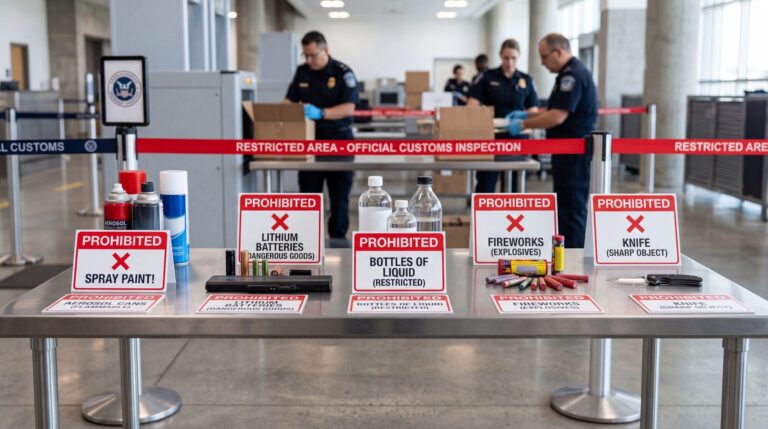
- Cleaning supplies and consumables — these cannot be shipped internationally anyway due to hazardous materials regulations. Detergent, aerosol cans, paint, and similar items must be left behind.
Category 3: Maybe Ship — Where the Real Decisions Happen
This is where we spend most of our time with customers, because these are the items where the answer genuinely depends on your situation. The key question for every “Maybe” item is: Does the replacement cost at my destination, plus the hassle of replacing it, exceed the shipping cost?
- Quality cookware — a $300 Le Creuset Dutch oven is absolutely worth shipping. A $25 nonstick pan is not. We see customers agonize over their entire kitchen, when the answer is usually: ship the good stuff, leave the cheap stuff.
- Books — books are heavy and expensive to ship by weight. A box of 20 paperbacks costs $65 to ship but might only be worth $40 to replace. However, rare editions, signed copies, professional reference books, and books with sentimental inscriptions are worth shipping. Be selective.
- Clothing and shoes — ship your quality wardrobe staples and anything that fits well and you wear regularly. Leave behind fast-fashion items, worn-out basics, and anything you have been meaning to donate for months. Your international move is the perfect excuse to finally let go.
- Bedding and linens — high-quality sheets, a favorite duvet, and good towels are worth shipping if you have the space. However, keep in mind that bed sizes differ between countries. A US queen mattress is not the same dimensions as a European double. Check before you ship bedding that may not fit.
- Art and decor — original artwork, family portraits, and meaningful decor pieces are worth shipping. Mass-produced prints, generic throw pillows, and seasonal decorations are not. Fragile items like framed art require careful packing — see our guide on how to pack boxes for international shipping for tips.
- Small furniture — a solid hardwood side table or a beloved reading chair might be worth shipping if it has genuine quality and sentimental value. But run the numbers first. If the shipping cost exceeds 50% of the replacement cost, it is usually better to sell and replace.
The $65 Box Test
Here is the simplest decision-making tool we give our customers. Before you put anything in a box, ask yourself: “Would I pay $65 to have this item waiting for me when I arrive?” If the answer is an immediate yes, it goes in the box. If you hesitate, it probably does not belong in your shipment.
This test is surprisingly effective because it forces you to assign a real dollar value to each item. That fondue set you used once? Probably not worth $65. Your grandmother’s cast-iron skillet? Absolutely. Your collection of 50 mugs from various vacations? Pick your three favorites and ship those.
We have seen customers reduce their shipments by 30–40% just by applying this simple test, saving hundreds of dollars in shipping costs while still getting everything that truly matters to them.
Timing Your Downsizing
Start downsizing at least 6–8 weeks before your move date. This gives you enough time to sell valuable items, arrange donations, and make thoughtful decisions rather than panic-packing everything at the last minute. We recommend this timeline:
- 8 weeks before: Walk through every room and create a complete inventory. Categorize everything using the three-category framework above.
- 6 weeks before: Start selling items online — Facebook Marketplace, Craigslist, and local buy-sell groups are your best options for furniture and large items. List high-value items on eBay for maximum return.
- 4 weeks before: Schedule donation pickups for unsold items. Most charities need 1–2 weeks notice for furniture pickups.
- 3 weeks before: Finalize your shipping inventory and get a quote from City Post Express. Knowing the exact cost helps you make final decisions on borderline items.
- 2 weeks before: Begin packing your “Definitely Ship” items. This is also when you should be living with less and confirming you truly need everything in your shipment.
- 1 week before: Final pack, label, and arrange pickup or drop-off for your shipment.
Common Mistakes We See
After helping thousands of customers downsize for international moves, these are the mistakes we see most often:
Shipping everything out of anxiety. The fear of not having something you need leads people to ship far more than necessary. Remember: you are moving to a country with shops. Almost everything can be purchased at your destination, often for less than the shipping cost.
Waiting until the last minute. Panic leads to poor decisions. People either ship everything because they ran out of time to sort, or they leave behind things they genuinely needed because they were rushing. Start early.
Ignoring voltage differences. We cannot tell you how many customers have shipped US appliances to Europe, only to discover they do not work — or worse, they burn out within weeks because a basic plug adapter does not convert voltage. If it has a motor or heating element and your destination uses a different voltage, leave it behind.
Forgetting about customs regulations. Certain items are restricted or prohibited in different countries. Food products, plants, some medications, and animal products can all cause problems at customs. Check your destination country’s import regulations before you pack, or ask us — we deal with customs requirements daily and can tell you exactly what will and will not clear.
Not considering the size of their new home. European apartments and homes are generally smaller than American ones. That oversized sectional sofa or king-size bed frame may physically not fit in your new space. Research typical home sizes at your destination before deciding what furniture to ship.
What About Sentimental Items?
This is the hardest part of decluttering before an international move, and we want to be honest about it. We have watched customers tear up over a set of dishes from their mother, a worn armchair where they read to their kids, or a box of high school yearbooks. These decisions are genuinely difficult.
Our advice: ship the items that carry irreplaceable memories. A few extra boxes of sentimental items are worth far more than the shipping cost. But be honest with yourself about what is truly sentimental versus what you are simply accustomed to having around. There is a difference between your grandmother’s handwritten recipe box and a set of Corelle dishes you have had since college.
If you are struggling, take photos of sentimental items you decide not to ship. Having a digital record makes it much easier to let go of the physical object.
How City Post Express Helps
We do more than just ship boxes. When you contact us for a quote, we walk you through this entire decision-making process. We can tell you exactly how much your shipment will cost based on the number of boxes you plan to send via our international mini-moves service, which is designed specifically for people shipping personal belongings rather than full household moves.
For larger shipments, our ocean freight service offers competitive rates for door-to-door delivery. We handle customs paperwork, provide packing guidance, and track your shipment from pickup to delivery.
If you want to see pricing upfront, visit our packages page to view box rates and service options. And if you are still figuring out the cheapest way to get your things overseas, our guide to the cheapest way to ship overseas breaks down all your options.
Downsizing for an international move is one of the most stressful parts of relocating. But with a clear framework, honest cost calculations, and a shipping partner who has seen it all, you can make smart decisions that save money and reduce stress. Start with the three categories. Apply the $65 box test. And when you are ready, get in touch with us — we are here to help you figure it out.
Related Reading
Ready to Ship?
Get a free, no-obligation quote for your move. Door-to-door service with customs clearance included.
Get a Free Quote