Moving Overseas with Pets: What You Need to Know Before You Go
Planning an international move with your dog or cat? From microchips and rabies certificates to airline rules and quarantine requirements, here is everything you need to know about moving overseas with pets — with country-specific guidance for Ireland, the UK, and the EU.
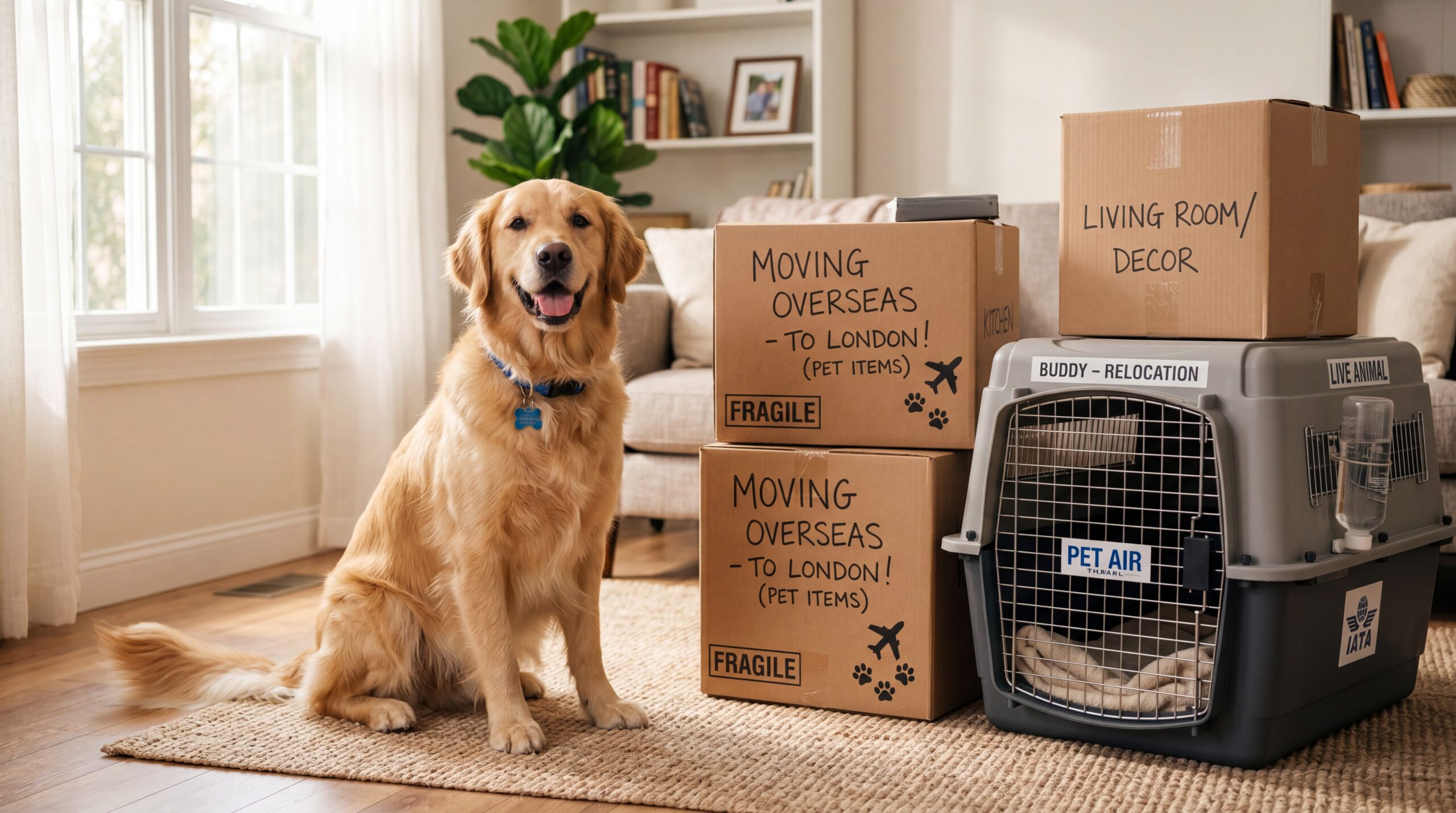
Over the past 25 years, City Post Express has helped thousands of families relocate from the United States to Ireland, the UK, and destinations across Europe. One of the most common questions we hear during the planning stage is not about furniture or shipping timelines — it is about the family pet. “Can I bring my dog to Ireland?” “How do I fly my cat to London?” “Is there quarantine?”
We want to be upfront: City Post Express does not ship pets. We ship household goods, personal belongings, and everything else that makes a house feel like home. But because international pet relocation is such an important part of the moving process, we have spent decades advising customers on what to expect and connecting them with specialist pet transport companies who do this work every day.
This guide draws on that real-world experience. Whether you are moving abroad with dogs, relocating with cats, or shipping pets overseas for the first time, here is what you need to know before you go.
Start Planning 4 to 6 Months Before Your Move
International pet relocation is not something you can arrange at the last minute. Most destination countries require a specific sequence of vaccinations, tests, and paperwork — each with mandatory waiting periods. If you miss a deadline, your pet may not be allowed to travel on your planned date, or worse, could face quarantine on arrival.
As a general rule, begin the pet relocation process at least four to six months before your move date. For countries with stricter requirements like Australia, Japan, or Singapore, you may need even longer.
Here is a typical timeline for moving a dog or cat from the US to Ireland or the EU:
- 4 to 6 months out: Research destination country requirements. Schedule an appointment with a USDA-accredited veterinarian.
- 3 to 4 months out: Ensure your pet has an ISO-compliant microchip (15-digit). Get the rabies vaccination administered after the microchip is implanted.
- 1 to 4 months out: Complete any required blood tests, such as the rabies titer test for certain destinations. For dogs entering Ireland or the UK, arrange the required tapeworm treatment.
- 10 days before travel: Visit your USDA-accredited vet for the final health examination and to complete the EU health certificate (Annex II) or USDA APHIS Form 7001.
- Within 10 days of travel: Submit completed paperwork to your local USDA APHIS Veterinary Services office for endorsement.
Essential Documentation for International Pet Travel
The paperwork is often the most stressful part of moving overseas with pets. Every document must be completed correctly, signed in the right ink, and submitted within strict time windows. Here is what you will typically need:
Microchip
Nearly every country requires your pet to have an ISO 11784/11785 compliant microchip (a 15-digit transponder). This must be implanted before the rabies vaccination is administered. If your pet already has a non-ISO American microchip, you will likely need a second, ISO-compliant chip implanted. Many US veterinary scanners cannot read ISO chips and vice versa, so having both ensures your pet can be identified in either country.
Rabies Vaccination
A current rabies vaccination is required by virtually every destination country. For EU entry, the vaccine must be administered at least 21 days before travel and after the microchip has been implanted. Make sure your vet records the microchip number on the rabies certificate — without this link, the vaccination may not be accepted.
EU Health Certificate (Annex II)
If you are moving to Ireland, the UK, or any EU member state, you will need an EU health certificate completed by your USDA-accredited vet within 10 days of travel. This multi-page document covers your pet’s identification, vaccination history, and health status. It must then be endorsed by the USDA APHIS Veterinary Services office before departure.
Tapeworm Treatment (Dogs Only — Ireland and the UK)
This is one requirement that catches many American families off guard. Dogs entering Ireland or the United Kingdom must receive a tapeworm (Echinococcus multilocularis) treatment administered by a veterinarian not less than 24 hours and not more than 120 hours (5 days) before arrival. The treatment must be recorded on the health certificate with the product name, date, and time of administration. Missing this step can result in your dog being refused entry or placed in quarantine.
USDA APHIS Endorsement
Your completed health certificate must be submitted to the USDA APHIS Veterinary Services office for your state. They review and endorse the documents, confirming everything meets the destination country’s requirements. Allow time for this step — FedEx or hand delivery is strongly recommended rather than regular mail.
Pet Travel Requirements by Destination
Every country has its own rules, and getting the details right is critical. Here is what you need to know for the most popular destinations we serve.
Ireland
Ireland is one of the more straightforward destinations for pet relocation from the United States — as long as your paperwork is in order. Key requirements include:
- ISO-compliant microchip
- Rabies vaccination (at least 21 days before travel)
- EU health certificate endorsed by USDA APHIS
- Tapeworm treatment for dogs (24 hours to 5 days before arrival)
- No quarantine for pets arriving from the US with correct documentation
Ireland does not require a rabies titer blood test for pets arriving from the United States, as the US is classified as a listed (low-risk) country. Full details are available on the Irish Department of Agriculture website.
If you are planning a move to Ireland, our complete guide to moving to Ireland from the US covers everything from visas to shipping timelines, and our Ireland destination page details our full range of services.
United Kingdom
The UK’s requirements are very similar to Ireland’s, though post-Brexit, the UK is no longer part of the EU pet passport scheme. Requirements include:
- ISO-compliant microchip
- Rabies vaccination (at least 21 days before travel)
- An Animal Health Certificate (AHC) issued by an Official Veterinarian — for US-origin pets, the USDA-endorsed EU health certificate is typically accepted
- Tapeworm treatment for dogs (24 hours to 5 days before arrival)
- No quarantine for compliant pets from the US
Pets must enter the UK through an approved port or airport. Not all airports accept animal arrivals, so confirm your entry point in advance. See our UK destination page for more on our moving services to Britain.
Other EU Countries (France, Germany, Netherlands, etc.)
EU member states follow a harmonised set of pet import rules under EU Regulation 576/2013. From the US, you will generally need:
- ISO-compliant microchip
- Rabies vaccination (at least 21 days before travel)
- EU health certificate endorsed by USDA APHIS
- Rabies antibody titer test — required by some EU countries for pets from non-listed third countries (check your specific destination)
Note that the tapeworm treatment requirement applies specifically to Ireland, the UK, Finland, and Norway — not all EU countries.
Australia, Japan, and Other Strict Destinations
Some countries have significantly more complex requirements, including mandatory quarantine periods. Australia requires a minimum 10-day quarantine for all dogs and cats, along with extensive blood tests and treatments over a six-month preparation period. Japan requires a 180-day waiting period after a rabies titer test. If you are moving to one of these destinations, working with a professional pet transport company is not optional — it is essential.
Airline Requirements for Flying with Pets
How your pet travels depends largely on their size and the airline you choose. There are two main options:
In-Cabin Travel
Small dogs and cats — generally under 17 to 20 pounds including the carrier — can often travel in the cabin with you, in a soft-sided carrier that fits under the seat. Airlines charge between $125 and $300 each way for in-cabin pets on international flights. Space is limited, so book early and confirm the airline’s specific size and weight limits.
Cargo Hold Travel
Larger pets must travel in the pressurised, climate-controlled cargo hold in an IATA-compliant crate. Your pet must be able to stand up, turn around, and lie down comfortably inside the crate. Cargo pet transport typically costs $500 to $2,000 or more on international routes, depending on the airline, route, and size of the crate.
A few important airline considerations:
- Breed restrictions: Most airlines will not transport brachycephalic (flat-faced) breeds such as Bulldogs, Pugs, and Persian cats in cargo due to respiratory risks.
- Temperature embargoes: Airlines may refuse to transport pets in cargo when ground temperatures at departure, arrival, or layover airports exceed 85°F (29°C) or drop below 45°F (7°C).
- Direct flights are best: Whenever possible, book a direct flight to minimise stress and reduce the risk of complications during layovers.
- Sedation is discouraged: Most airlines and veterinary organisations advise against sedating pets for air travel, as sedation can affect breathing and balance at altitude.
How Much Does International Pet Relocation Cost?
The total cost of moving overseas with pets varies widely depending on your destination, the size of your pet, and whether you handle the logistics yourself or hire a professional service. Here is a general breakdown:
- Veterinary costs (microchip, vaccinations, health certificate, exams): $200 to $500 per pet
- USDA APHIS endorsement fee: $38 for the first two pets, $22 for each additional pet
- Airline fees: $125 to $300 (in-cabin) or $500 to $2,000+ (cargo)
- IATA-approved travel crate: $50 to $400 depending on size
- Professional pet transport service: $2,000 to $7,000+ for a full-service international relocation
All in, most families spend between $500 and $3,000 per pet for a DIY relocation, or $2,500 to $8,000+ per pet when using a full-service transport company. While the costs are significant, families who have been through the process consistently tell us it was worth every penny to have their pet with them in their new home.
Recommended Pet Transport Companies
While City Post Express handles your household goods, these specialist companies handle the safe transport of your pets. We have worked alongside all of them over the years and have heard consistently positive feedback from our customers:
- International Pet and Animal Transportation Association (IPATA) — The industry body for pet transport professionals. Their member directory is the best starting point for finding a reputable, accredited transporter.
- Starwood Animal Transport — A well-established US-based pet relocation company with extensive experience in moves to Europe and beyond.
- PetRelocation — Offers full-service international pet transport including documentation assistance, customs clearance, and door-to-door delivery.
- Air Animal Pet Movers — Specialises in international pet shipping with USDA-registered animal transport services.
When choosing a pet transporter, verify that they are USDA-registered and ideally an IPATA member. Be wary of companies advertising on classifieds sites or requesting payment via wire transfer — pet transport scams are unfortunately common.
Preparing Your Pet for the Journey
The weeks leading up to your move are crucial for getting your pet ready — both physically and emotionally.
Crate Training
If your pet will travel in a crate (cabin or cargo), introduce them to it several weeks before departure. Feed meals inside the crate. Place familiar bedding and a favourite toy inside. Gradually increase the time your pet spends in the crate with the door closed. A pet that feels safe in their crate will travel with far less stress.
Packing a Pet Travel Kit
Put together a travel kit that includes:
- Absorbent “piddle pads” for the crate lining (and extras in your carry-on)
- A portable water bowl and bottled water
- A small supply of your pet’s regular food
- Waste bags
- Copies of all health documents (plus digital backups)
- Your pet’s regular medications
- A recent photo of your pet in case they become separated from you
Talk to Your Vet About Anxiety
Some pets are naturally anxious travellers. Speak with your veterinarian about calming options. Natural calming sprays, pheromone collars, and anxiety wraps are often more appropriate than sedation for air travel. Your vet can advise on what is best for your specific pet.
Settling In: What to Do After You Arrive
The journey does not end when you land. Here is how to help your pet adjust to their new home abroad:
- Register with a local vet as soon as possible. Bring all your pet’s health records and establish care before you need it in an emergency.
- Set up a familiar space with your pet’s bed, toys, and bowls. Consistency helps reduce stress after a long journey.
- Maintain your routine. Feed at the same times, walk your dog at consistent intervals, and keep things as predictable as possible during the transition.
- Be patient. It can take dogs and cats several weeks to fully settle into a new environment. The unfamiliar smells, sounds, and routines are a lot to process.
- Update your pet’s microchip registration with your new address and local contact details.
Coordinating Your Pet Move with Your Household Shipment
One thing we always advise families is to think about timing. Your pet will arrive by air, usually within a day. Your household goods — shipped by sea — typically take 4 to 8 weeks to reach Ireland or the UK from the United States. That means your pet’s essentials (bed, bowls, favourite toys, regular food) should travel with you or be packed in your air freight shipment, not buried in a sea container.
This is where our international mini moves service can help. Many of our customers use a small air freight shipment to send essential items ahead — including pet supplies — so everything is waiting when they arrive.
Planning a move and need help coordinating the logistics? Get in touch with City Post Express for a free quote on your household shipment, and we will be happy to advise on the pet side of things too.
Related Reading
Ready to Ship?
Get a free, no-obligation quote for your move. Door-to-door service with customs clearance included.
Get a Free Quote