What Is Customs Clearance? A Beginner’s Guide to International Shipping
Customs clearance is the process of getting your shipment legally approved to enter or leave a country. Learn what it involves, which documents you need, how long it takes, and how City Post Express handles it for every shipment.
What Is Customs Clearance?
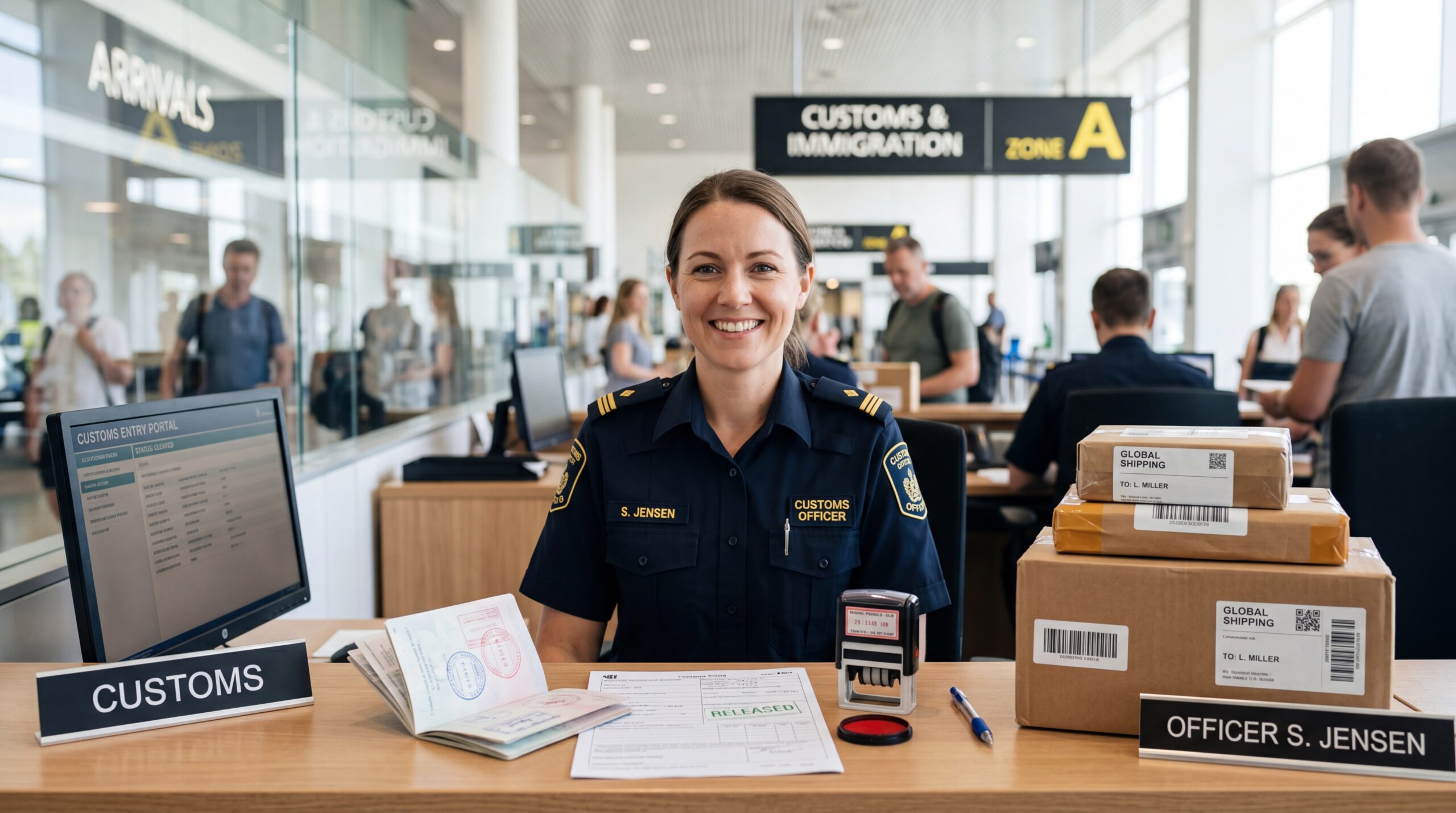
Customs clearance is the formal process of getting a shipment authorized by a country’s government to legally cross its borders. Every item entering or leaving a country—whether it’s a container of commercial goods or a family’s household belongings—must pass through this process.
At its core, customs clearance involves three things: submitting the correct documentation, paying any applicable duties and taxes, and receiving official approval for your goods to proceed to their destination. Without clearance, your shipment sits at the port or airport, going nowhere.
At City Post Express, we handle customs clearance on every shipment we manage. With over 25 years of experience and an FMC license (#034938), we clear hundreds of shipments per year across Ireland, the UK, and destinations throughout Europe. This guide draws on that hands-on experience to explain exactly how customs clearance works—and what you need to know before your shipment ships.
Customs Clearance Meaning: Why It Exists
Governments require customs clearance for several important reasons:
- Revenue collection: Import duties and VAT (Value-Added Tax) are significant sources of government income. Customs authorities assess and collect these charges on incoming goods.
- Security and public safety: Customs inspections prevent prohibited, restricted, or dangerous goods from entering a country—everything from controlled substances to invasive plant species.
- Trade regulation: Countries use tariffs, quotas, and trade agreements to manage their economies. Customs enforcement ensures importers and exporters comply with these rules.
- Data and statistics: Every customs declaration feeds into national trade data, helping governments track import and export volumes across industries.
- Customs Clearance for International Shipping: Complete Guide
In practical terms, customs clearance is the checkpoint between international transit and domestic delivery. Until your shipment is cleared, it legally belongs to no one on the destination side.
Who Handles Customs Clearance?
You might assume customs clearance is something customs officers do on their own. In reality, it’s a collaborative process involving several parties:
Customs Brokers
A customs broker is a licensed professional who prepares and submits customs documentation on behalf of importers or exporters. In the United States, customs brokers must be licensed by U.S. Customs and Border Protection (CBP). In the EU, brokers operate under national licensing frameworks and must be authorized by the relevant customs authority.
Customs brokers handle tariff classification, duty calculation, and regulatory compliance. They are your front line against delays, fines, and seizures. For complex shipments—especially international household moves—working with an experienced broker is not optional; it’s essential.
Freight Forwarders
Many freight forwarders, including City Post Express, provide customs brokerage as part of their service. This means you get a single point of contact for both the physical movement of your goods and the paperwork required to clear them. When we arrange ocean freight or air freight, customs clearance is built into the process—not an afterthought.
The Importer of Record
The importer of record is the person or entity legally responsible for ensuring goods comply with all import regulations. For personal shipments, this is usually the person relocating. For commercial shipments, it’s the buying company. The importer of record is ultimately liable for duties, taxes, and any penalties—even if a broker handles the filing.
The Customs Clearance Process: Step by Step
While specifics vary by country, the customs clearance process follows a consistent pattern worldwide. Here is how it works in practice:
Step 1: Documentation Preparation
Before your shipment arrives at its destination port, all required paperwork must be prepared and ready for submission. This is where most delays originate—not at the inspection stage, but at the documentation stage. Getting it right the first time is critical.
Step 2: Customs Declaration Filing
Your customs broker submits a formal declaration to the customs authority. This declaration includes details about what is being imported, its value, its origin, and the applicable tariff classification. In the EU, this is done through electronic systems like Ireland’s AIS (Automated Import System). In the US, it’s filed through the Automated Commercial Environment (ACE).
Step 3: Document Verification and Risk Assessment
Customs officers review the declaration against the supporting documents. Many shipments are cleared electronically without physical inspection. However, some are flagged for additional review based on risk profiling—factors like the origin country, the type of goods, the declared value, or the importer’s track record.
Step 4: Duty and Tax Assessment
Customs calculates any duties and taxes owed. This is based on the tariff classification (determined by the HS code), the customs value of the goods, and the country of origin. We explain duties and taxes in more detail below.
Step 5: Payment
Duties and taxes must be paid before goods are released. In some cases, importers use deferred payment accounts to settle charges on a monthly basis rather than per-shipment. Brokers often facilitate this.
Step 6: Release of Goods
Once everything checks out and payments are settled, customs issues a release. Your goods are now free to be delivered to their final destination. The entire process can happen in hours for straightforward shipments—or stretch into days or weeks if problems arise.
What Documents Are Needed for Customs Clearance?
The exact documents required depend on the type of shipment, the origin and destination countries, and the nature of the goods. However, most international shipments require some combination of the following:
- Commercial invoice: Lists the goods, their value, the buyer, and the seller. For personal shipments, a detailed inventory with estimated values serves a similar purpose.
- Packing list: Describes the contents of each box, crate, or container, including weights and dimensions.
- Bill of lading (ocean) or air waybill (air): The carrier’s contract and receipt for your goods. This document proves your shipment is in transit and identifies who is entitled to collect it.
- Certificate of origin: Confirms where the goods were manufactured or produced. This affects duty rates, especially under free trade agreements.
- HS code classification: Every product in international trade is assigned a Harmonized System (HS) code—a standardized numerical code used worldwide to classify traded goods. The first six digits are universal; additional digits vary by country for finer classification. Getting the HS code wrong can mean overpaying duties or triggering an audit.
- Import license or permit: Required for certain regulated goods such as food products, pharmaceuticals, firearms, or agricultural items.
For personal relocations—such as someone moving to Ireland from the US—additional documents come into play, including proof of residence, visa or immigration documentation, and a Transfer of Residence declaration.
Duties vs. VAT: Understanding What You Owe
Two types of charges commonly apply during customs clearance, and they are frequently confused:
Customs Duties
Duties are taxes on imported goods, calculated as a percentage of the goods’ customs value. The rate depends on the HS code classification and the country of origin. For example, importing new furniture from the US into the EU might attract a duty rate of 0–6%, depending on the specific item.
Duty rates are published in each country’s tariff schedule. In the EU, this is the Common Customs Tariff (CCT). In the US, it’s the Harmonized Tariff Schedule (HTS).
VAT (Value-Added Tax)
VAT is charged on most imports into the EU and UK, calculated on the total value of the goods plus any duties paid, plus shipping costs. Ireland’s standard VAT rate is 23%. The UK charges 20%. VAT is not a customs duty—it is a consumption tax collected at the point of import.
This distinction matters because some shipments may be exempt from duties but still subject to VAT, or vice versa. Understanding both charges prevents surprises when your shipment arrives.
When Duties and VAT Do Not Apply: Transfer of Residence Relief
If you are relocating your primary residence to an EU member state, you may qualify for Transfer of Residence (TOR) relief under EU Council Regulation 1186/2009. This exemption allows you to import your personal belongings and household effects free of both customs duties and VAT, provided you meet specific conditions:
- You must have lived outside the EU for at least 12 consecutive months.
- The goods must have been owned and used by you for at least six months prior to your move.
- The goods must be intended for your personal use at your new residence.
- You must not sell, lend, or otherwise dispose of the goods for 12 months after importation without notifying customs.
In Ireland, TOR relief is administered by Revenue, the Irish tax and customs authority. You apply by submitting a completed C&E 1076 form along with supporting documentation such as proof of prior residence abroad, your PPS number, and a detailed inventory of goods.
This is one of the most valuable reliefs available to people relocating internationally, and it is something we help our customers navigate on virtually every move to Ireland. Getting the paperwork right is the difference between a duty-free import and an unexpected tax bill running into thousands of euro.
How Long Does Customs Clearance Take?
This is one of the most common questions we hear, and the honest answer is: it depends.
- Straightforward shipments with correct documentation: Often cleared within 1–3 business days. Many are cleared electronically within hours.
- Shipments requiring physical inspection: Add 2–5 additional business days, depending on port congestion and the customs authority’s workload.
- Shipments with documentation errors or missing paperwork: These can be held for weeks. In the worst cases, goods are placed in bonded storage at the importer’s expense until issues are resolved.
In our experience, the single biggest factor in clearance speed is documentation quality. A complete, accurate filing clears fast. An incomplete one does not. This is why we review every document before submission—catching errors at the preparation stage rather than after the shipment is already sitting at the port.
Common Causes of Customs Clearance Delays
Delays at customs are rarely random. They almost always trace back to one of these issues:
- Incorrect or incomplete documentation: Missing invoices, wrong HS codes, mismatched values between the commercial invoice and the declaration—these are the most frequent culprits.
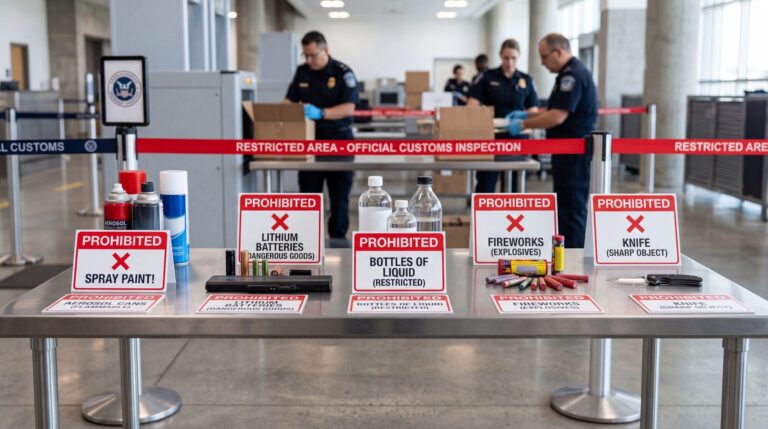
- Prohibited or restricted items: Shipping items that are banned or require special permits in the destination country will stop your shipment cold. Common examples include certain food products, plants, animal products, and electronics that do not meet local safety standards.
- Undervaluation: Declaring goods at a lower value than their actual worth to reduce duty payments is illegal. Customs authorities are experienced at spotting undervaluation, and the consequences include fines, seizure of goods, and criminal penalties.
- Random inspections: Even with perfect paperwork, a percentage of shipments are selected for physical inspection. This is routine and unavoidable, but it does add time.
- Port congestion: High-volume periods—such as the weeks before Christmas or following major trade disruptions—can slow processing across the board.
- Outstanding payments: Goods will not be released until all duties, taxes, and fees are paid in full.
Customs Clearance for Personal Moves vs. Commercial Shipments
Most guides to customs clearance focus on commercial imports and ecommerce. But for people relocating internationally, the process has important differences:
Commercial Shipments
Commercial goods are always subject to duties and VAT (unless a specific trade agreement provides an exemption). Valuation is based on the transaction value—what the buyer actually paid. Classification, compliance, and record-keeping requirements are rigorous, and penalties for errors are steep.
Personal and Household Moves
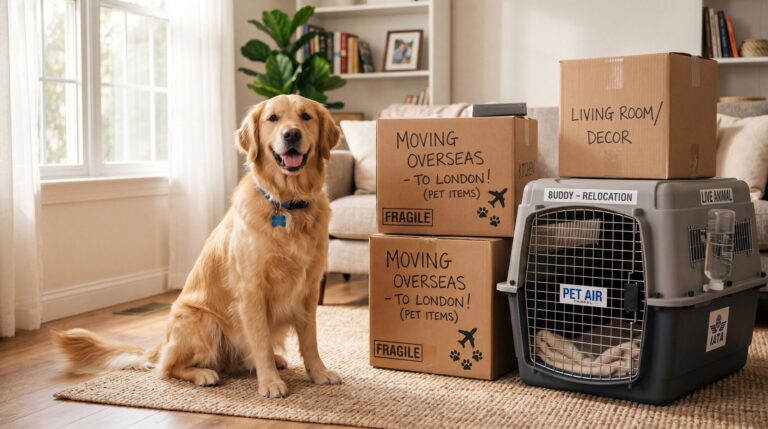
When you ship your personal belongings as part of an international relocation, different rules apply. As noted above, Transfer of Residence relief can eliminate duties and VAT entirely for qualifying moves into the EU. Even in countries without a formal TOR scheme, personal effects are often subject to reduced rates or simplified procedures.
However, personal shipments are not a free pass. You still need a detailed inventory, proof of ownership, and evidence that you are genuinely relocating—not simply importing goods for resale. Customs authorities are vigilant about abuse of personal importation reliefs.
This is an area where City Post Express adds particular value. Unlike commercial freight forwarders who may handle one or two personal moves a year, we specialize in international household relocations. We know exactly what documentation Irish Revenue, UK HMRC, and other European customs authorities expect to see, because we submit it every week.
How City Post Express Handles Customs Clearance
We do not treat customs clearance as an add-on or a separate billable service. It is integrated into every shipment we manage, because a shipment that is not cleared is a shipment that has not arrived.
Here is what our process looks like in practice:
- Pre-shipment consultation: Before anything ships, we review your inventory, identify any items that may require special permits or attract unusual duty treatment, and advise you on the documentation you will need to prepare.
- Document preparation and review: We prepare the customs declaration and review all supporting documents for accuracy and completeness. For personal moves, we assist with Transfer of Residence applications and coordinate with Revenue or HMRC as needed.
- Filing and tracking: We file your customs declaration electronically and monitor its progress through the clearance system. If customs raises a query, we respond immediately—not the next business day.
- Duty and tax management: We calculate expected duties and taxes in advance so there are no surprises. Where reliefs or exemptions apply, we ensure they are properly claimed.
- Release and delivery coordination: Once cleared, we coordinate the final leg of delivery to your door.
Whether you are shipping a full container of household goods via ocean freight or sending urgent items via air freight, customs clearance is handled. That is not a selling point—it is a baseline expectation.
Key Takeaways
- Customs clearance is the mandatory process of getting government authorization for goods to enter or leave a country.
- The process involves documentation, declaration filing, duty/tax assessment, payment, and release.
- Customs brokers and freight forwarders handle the process on your behalf. Working with an experienced provider prevents costly errors.
- Duties and VAT are separate charges. Duties vary by product and origin; VAT is a flat consumption tax.
- People relocating to the EU may qualify for Transfer of Residence relief, which can eliminate both duties and VAT on personal belongings.
- The most common cause of delays is incomplete or incorrect documentation—not slow customs processing.
- City Post Express includes customs clearance in every shipment, backed by 25+ years of experience and an FMC license (#034938).
Related Reading
Ready to Ship?
Get a free, no-obligation quote for your move. Door-to-door service with customs clearance included.
Get a Free Quote