Get Paid to Move to Ireland — What You Actually Need to Know
Ireland's Our Living Islands program offers up to €84,000 to renovate vacant properties on remote offshore islands. Here's what the headlines don't tell you — and how to actually handle the move if you qualify.

The Headline Sounds Too Good to Be True — Because It Partly Is
If you have been scrolling social media lately, you have probably seen some version of this claim: “Ireland will pay you $92,000 to move there.” It is technically based on a real program, but the reality is more nuanced than any viral headline suggests. Before you start packing boxes, here is what you actually need to know about getting paid to move to Ireland — and what it takes to ship your life across the Atlantic if you decide to go for it.
The Real Program: Our Living Islands
The Irish government launched Our Living Islands in June 2023 as a 10-year national policy to sustain communities on roughly 30 offshore islands scattered along Ireland’s Atlantic coast. These are not Dublin suburbs. They are remote, windswept islands — places like Inis Mor on the Aran Islands, Arranmore off Donegal, Tory Island, Inishbofin, Clare Island, and Dursey Island — with a combined permanent population of fewer than 3,000 people.
The centrepiece incentive is an enhanced version of the Vacant Property Refurbishment Grant (part of the Croi Conaithe scheme). On qualifying islands, you can receive:
- Up to €50,000 for renovating a vacant property
- Up to €70,000 for renovating a derelict property (€50,000 base plus a €20,000 top-up for structurally unsound buildings)
- An additional €14,000 top-up specifically for island properties, bringing the maximum to approximately €84,000 (~$92,000 USD at the time the program launched)
That is where the “get paid to move to Ireland” figure comes from. But there are critical details the headlines leave out.
What the Headlines Don’t Tell You
It Is a Renovation Grant, Not a Relocation Payment
Nobody is handing you a cheque to relocate. The grant covers building work only — structural repairs, roofing, plumbing, electrical, insulation, and cosmetic renovation. You need to find a vacant or derelict property on a qualifying island, get quotes from contractors, apply through your local authority, and the funds are paid out after the work is completed and inspected. You are fronting renovation costs and being reimbursed.
You Still Need the Right to Live in Ireland
The grant does not come with a visa. If you are a US citizen, you can buy property in Ireland without restrictions, but owning a house does not give you residency. You will need a valid immigration pathway — a Critical Skills Employment Permit, a General Employment Permit, a Stamp 0 permission for retirees, or another qualifying route. EU, EEA, and UK citizens can move freely, but everyone else needs to sort their immigration status independently of this program.
The Properties Are on Remote Islands
“Remote” means exactly that. Many of these islands are accessible only by ferry or small aircraft, weather permitting. Grocery delivery is not a given. Tradespeople charge a premium to haul materials out by boat. Internet connectivity has improved thanks to the National Broadband Plan, but some islands are still catching up. If you love solitude, wild landscapes, and tight-knit communities, this could be paradise. If you need a Starbucks within walking distance, this is not it.
The Program Is Small-Scale
Across all 30-odd islands, we are talking about a limited number of vacant and derelict properties. This is not a mass migration program. It is a targeted effort to keep existing island communities alive. Competition for suitable properties can be real, and the application and approval process takes time.
Beyond the Islands: Other Ireland Relocation Incentives
The island grants get the most attention, but Ireland has other programs that support rural relocation, even if they are less flashy:
- Vacant Property Refurbishment Grant (mainland): The same Croi Conaithe scheme operates across all of Ireland — not just the islands. On the mainland, grants go up to €50,000 for vacant properties and €70,000 for derelict ones. No island top-up, but also no ferry commute.
- Rural Regeneration and Development Fund: This fund supports infrastructure projects in towns with populations under 10,000, improving amenities, broadband, and services in areas that might appeal to remote workers.
- Enterprise Ireland and IDA supports: If you are starting or relocating a business, there are grant and tax incentive programs for entrepreneurs, particularly in the tech and innovation sectors.
None of these are “get paid to move” in the way social media frames it. They are practical supports that can reduce the financial burden of relocating to rural Ireland — if you meet the criteria and do the legwork.
So You Actually Want to Make the Move — Now What?
Let’s say you have done your research, found a property, sorted your visa, and you are ready to relocate from the US to Ireland. The part nobody talks about in these articles is the practical reality of moving your belongings across the Atlantic.
What You Can Bring Duty-Free
Here is some genuinely good news: Ireland’s Transfer of Residence (ToR) relief means you can import your personal and household goods without paying customs duty or VAT, provided you meet these conditions:
- You have owned and used the items for at least 6 months before the move
- You have lived outside the EU for at least 12 consecutive months
- The goods are for personal use in your new Irish home (not for resale)
- You apply to Irish Revenue within the required timeframe
This can save you thousands in import taxes on furniture, kitchenware, clothing, electronics, and personal effects. It applies to your car as well, though vehicles have additional registration requirements. Full details are available from Revenue.ie.
Shipping Options and Realistic Timelines
Moving to Ireland does not have to mean shipping a full 40-foot container. In fact, if you are heading to an island property, a smaller shipment often makes more sense. Here is what to expect:
- Shared container / mini moves: Ideal for 1-3 bedroom households. Your belongings share space in a container with other shipments, keeping costs down. Door-to-port transit from the US East Coast to Dublin typically runs 4 to 6 weeks. Our international mini moves service is designed exactly for this.
- Full container: If you are shipping a full household, a dedicated 20-foot or 40-foot container gives you more control over timing. Expect 3 to 5 weeks ocean transit, plus inland delivery.
- Air freight: For essentials you need immediately — documents, medications, a few boxes of personal items — air freight gets things to Ireland in 5 to 10 business days.
For island destinations specifically, there is an additional logistics step. Goods clear customs in Dublin (or occasionally Shannon), then need onward transport by road to the nearest ferry port, and finally a ferry crossing to the island. We coordinate this entire chain so you are not left trying to negotiate boat transport for a pallet of your kitchen supplies.
What to Pack — and What to Leave Behind
If you are renovating a property on a remote island, think carefully about what is worth shipping. Furniture that fits an American-scale home may not suit a traditional Irish island cottage. Large appliances often run on different voltages. Here is our practical advice:
- Ship: Sentimental items, quality furniture that suits smaller spaces, books, artwork, clothing, kitchenware, and personal electronics (most modern devices handle 110-240V)
- Consider leaving: Large American-style refrigerators and ovens (Irish kitchens are smaller and use 220V), bulky sofas that would not fit through a cottage door, items that would cost more to ship than to replace
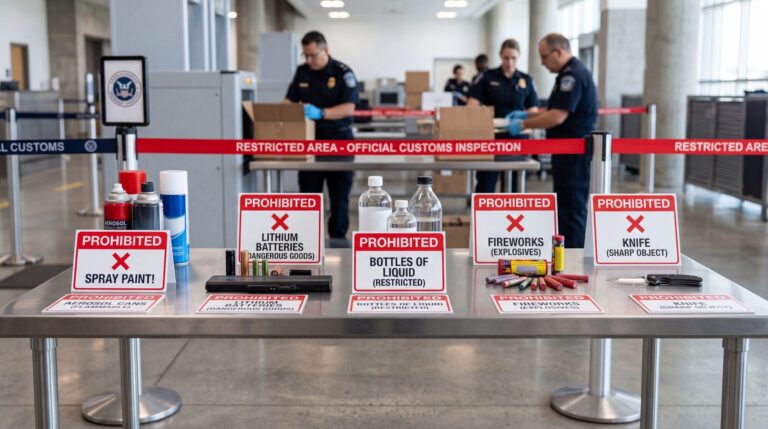
- Prohibited items: Fresh food, certain plants, firearms without a licence — check our packing guides before you start boxing things up
The Bottom Line
Can you get paid to move to Ireland? In a narrow, specific sense — yes. If you find a qualifying vacant or derelict property on one of Ireland’s offshore islands, meet the eligibility requirements, manage the renovation, and commit to living there long-term, you can receive a substantial grant toward renovation costs. There are also mainland grants and rural development supports worth exploring.
But this is not free money for showing up. It is a targeted program to preserve fragile island communities, and it requires real commitment — financial, logistical, and personal.
If you are seriously considering the move, the grant is just one piece of the puzzle. You will also need to navigate immigration, find the right property, manage a renovation from overseas, and figure out how to get your life from Point A to Point B across 3,000 miles of ocean.
That last part is where we come in. At City Post Express, we have helped hundreds of people ship their belongings to Ireland — whether they are heading to a Dublin apartment or a fixer-upper on Inis Mor. We handle customs paperwork, Transfer of Residence documentation, last-mile delivery coordination, and everything in between.
Planning a move to Ireland? Get a free quote and let us handle the shipping so you can focus on the renovation.
Related Reading
Ready to Ship?
Get a free, no-obligation quote for your move. Door-to-door service with customs clearance included.
Get a Free Quote